

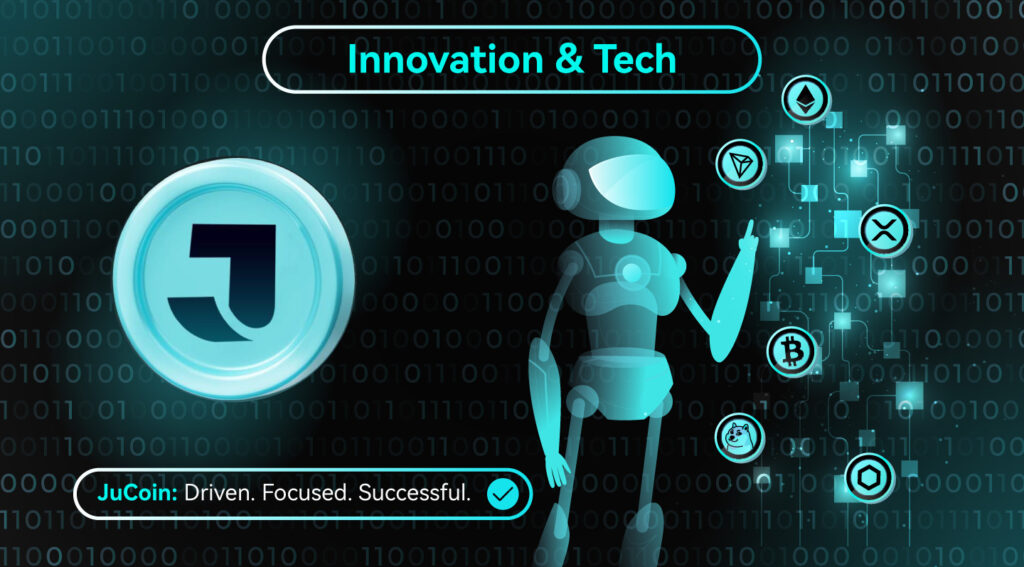
AGNT Hub is a Web3 infrastructure project focused on integrating AI Agents with an on-chain intelligence network. By deploying lightweight agents across a globally distributed node network, it delivers low-latency, high-precision data services and automated execution capabilities. AGNT Hub bridges AI models and blockchains—node operators stake AGNT tokens to participate in compute tasks and earn rewards, while dApp developers access complete APIs and SDKs for real-time calls and decentralized governance. This Innovation and Tech article will deeply analyze AGNT Hub’s potential across five dimensions: project positioning, core technologies, AGNT tokenomics, ecosystem progress, and risk strategies.
Abstract: AGNT Hub builds an AI Agents + on-chain compute network; AGNT tokens power compute fees, node incentives, and governance. The ecosystem already aggregates 50+ AI agent nodes and integrates with multiple dApps—watch for cross-chain expansion and enterprise partnerships next.
Project Positioning: Hub for AI Agents & On-Chain Intelligence
AGNT Hub positions itself as the Web3 era’s “AI Agents + on-chain compute network” provider. By staking AGNT tokens, nodes activate agent tasks, enabling distributed operators worldwide to participate in model inference, data scraping, and on-chain execution. Unlike centralized AI platforms, AGNT Hub leverages decentralized governance and on-chain consensus to ensure transparent, auditable compute results, creating an economic loop that shares value between nodes and application developers.

Core Technologies: Agent Layer & On-Chain Execution Flow
AGNT Hub’s core technology comprises a diverse set of AI Agents and a robust on-chain execution protocol. The platform ships with multiple general-purpose and customized Agents for text generation, image recognition, on-chain data scraping, and more. Node operators must stake AGNT to activate an Agent and process tasks. Whenever an Agent completes an inference, its result and execution proof are notarized on-chain via smart contracts, triggering multi-node data consistency checks and reward distribution. The full flow—“Task Scheduling → Agent Inference → On-Chain Notarization → Consensus Verification → Incentive Release”—ensures service quality, network security, and decentralization.
AGNT Tokenomics: Fee Model & Incentive Design
AGNT is AGNT Hub’s native token with a total supply of 1,000,000,000, allocated as follows:
-
Compute Fees (45%): paid by dApps when calling Agents
-
Node Incentives (30%): rewards for high-quality inference and data provision
-
Ecosystem Fund (15%): supports hackathons, developer incentives, and marketing
-
Team & Advisors (7%): 4-year linear unlock with a 1-year cliff
-
Strategic Partnerships (3%): reserved for enterprise collaborators
Nodes must lock a minimum AGNT stake to earn higher compute quotas; staking amount and historical SLA performance jointly determine final rewards, ensuring long-term network vitality and efficiency.
Ecosystem Progress: Multi-Node Deployment & Trusted Data Feeds
To date, AGNT Hub has onboarded over 50 nodes across Ethereum, BNB Chain, Polygon, and other major chains, providing AI-driven automation services to numerous DeFi and NFT platforms. The project has open-sourced its API, SDK, and smart contracts, and integrates with Chainlink Price Feeds and The Graph for seamless developer adoption. According to CoinGecko, iAgent Protocol (AGNT) achieved $920 in 24-hour trading volume and ranks #5594 by market cap—evidence of steadily rising market interest.
Risk & Strategy Recommendations
-
Compute Failure Risk: AI Agents may err or models become unstable—enhance SLA monitoring and penalty mechanisms.
-
Token Liquidity Risk: AGNT volatility could affect node revenue and dApp costs.
-
Competitive Pressure: Centralized AI providers (e.g., OpenAI) and decentralized rivals (e.g., SingularityNET) may encroach on this space.
-
Governance Centralization Risk: Continuously decentralize AGNT holdings to maintain network decentralization.
Investor Suggestions: Build diversified AGNT positions on major CEX/DEX (e.g., Aerodrome on Base); participate in node staking and governance votes; track cross-chain bridges and enterprise integration developments.
FAQ
Q1: How to join as an AGNT Hub node?
A1: Submit a node application on AGNT Hub’s website, stake AGNT tokens, and run the agent software to participate in compute tasks and earn rewards.
Q2: How are AI Agent call fees calculated?
A2: dApps pay AGNT based on task type and complexity; fees are distributed proportionally to nodes and the ecosystem fund via smart contracts.
Q3: How to acquire AGNT tokens?
A3: AGNT is available on Aerodrome (Base) and other platforms, and can be swapped via liquidity pools—monitor official announcements for updates.
Q4: Where to find documentation?
A4: Visit AGNT Hub’s Docs Center at docs.agnthub.ai for full API, SDK, and contract references.
Q5: How does AGNT governance work?
A5: AGNT holders propose and vote on network parameters, fund usage, and ecosystem partnerships via the DAO platform.
Key Takeaways
AGNT Hub constructs an AI Agents + on-chain execution network for decentralized inference and automation.
The core flow includes task scheduling, agent inference, on-chain notarization, consensus verification, and incentive release.
AGNT token fuels compute fees, node incentives, and governance (1B supply; 45% for compute fees).
Over 50 nodes deployed and integrated with major chains; market attention is climbing.
Recommended: stake AGNT, engage in governance, and watch cross-chain and enterprise integration progress.

Neason Oliver