

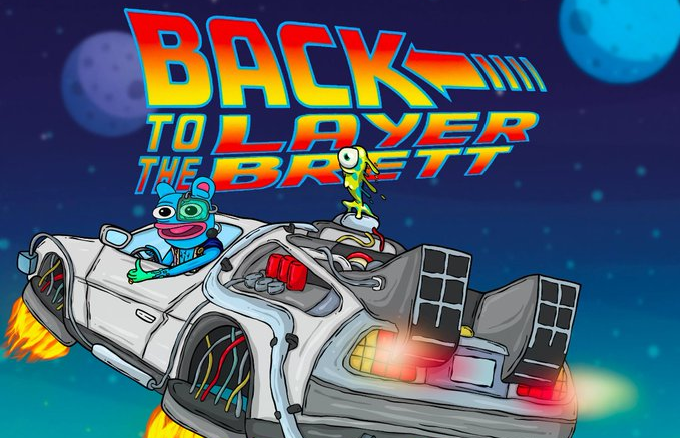
Layer Brett merges “meme virality” with “Layer 2’s low fees and high throughput” into a single growth narrative, aiming to pull sentiment and usability onto the same curve. For everyday users, it promises cheaper interactions and denser play; for teams and creators, it offers composable modules—points, quests, NFTs/mini-games—to lower campaign costs and extend lifecycles. This Token Insights report takes a research lens to mapping positioning, technical route, token allocation and value capture, ecosystem and roadmap, and provides participation and risk-control pointers.
Summary: Layer Brett applies L2’s cost and speed advantages to meme execution, pairs them with staking/quests/NFTs for retention, and uses the token for governance and incentives. The key is transparent disclosure and sustained use cases.
Project Overview & Positioning
Layer Brett’s outward positioning is “a Layer 2 memecoin on Ethereum.” Its core sell isn’t mere social heat; it’s turning low-fee, frequent interactions into a retention engine. When users complete quests, check-ins, mini-games, or event tickets on Layer Brett, they create more measurable behavioral data and cash-flow leads. According to CoinDesk, unlike short half-life memes that only rely on imagery and jokes, Layer Brett stresses turning campaign scripts and points loops into durable mechanisms, so new seasons, tie-ins, or themes can be reused faster.
Why pair “L2 × meme”?
For a meme to last, “high-frequency, low-value” interactions must be cheap—yet Ethereum L1 gas is unfriendly at peaks. Layer Brett chooses a Layer 2 path to push costs down for “likes-as-tips” and “quests-on-chain,” so heat isn’t siphoned away by gas. That lowers the barrier for on-chain newcomers and lets content teams iterate, distribute, and review more often.

Technical Route & Product Shape
Layer Brett emphasizes an “Ethereum-anchored L2 acceleration” path: process most transactions on L2, then batch data and proofs back to mainnet for faster confirmations and predictable fees. Whether optimistic or zk in flavor, Ethereum ultimately backs security and data availability. On this base, Layer Brett chains together points, NFT tickets, quest orchestration, and simple chain-game modules to close the “content—interaction—settlement” loop. When outside partnerships arrive, existing templates and settlement scripts can be reused.
Transaction UX & Developer Support
For users, Layer Brett needs to make signature counts, approval scopes, and slippage controls easy to grasp—with a polished “newbie mode” worthy of “ultimate memecoin” claims. For builders, the question is whether it provides a quest orchestrator (configurable conditions), an activity dashboard (metrics aggregation), and visualized treasury/buyback tooling. If these tools are integrated, creators can reuse playbooks at low marginal cost and iterate retention on a measurable dashboard.
Tokenomics: Supply, Allocation & Utility
Layer Brett’s token (the “token”) carries three roles: network/app access, community governance, and ecosystem incentives. According to Cointelegraph, early presale/allocation lines (30% presale, 25% staking rewards, team 2.5% with 24-month lock) are cited; from a research-methods perspective, the evaluation points are unchanged:
- Initial float (TGE circulation) being reasonable,
- Treasury disbursements and buybacks being transparent,
- Quest/points budgets directing toward real activity rather than wash farming.
For long-term value, the most important piece is to “circuit-ize” protocol cash flows (campaign income, NFTs/tickets, ad/partnership budgets)—i.e., regularly replenish the treasury or execute buybacks, rather than one-way spraying incentives into the market.
Value & Return Flows
If Layer Brett’s campaigns truly generate verifiable income, then the cadence of “treasury—buybacks—quests” can become a pricing anchor. Ideally, an on-chain dashboard would disclose, weekly, quest spend, secondary fees, NFT sales, and treasury inflows, and governance would set the split between buybacks and subsidizing quest costs. Then Layer Brett’s “usage value—valuation expectations” can close the loop. If disclosure is weak or budgets leak out long-term, the meme’s half-life shortens.
Ecosystem Partnerships & Growth Flywheel
Layer Brett’s growth flywheel boils down to three steps: content/IP tie-ins → templated activities (quests, tickets, NFTs) → retention and reuse. Low L2 fees enable “small but frequent” interactions; the quest system breaks them into a measurable funnel of “new—active—retained—paying.” Creators and small teams can quickly clone campaigns to the next tie-in. If cross-community badges and points interop are layered on, Layer Brett can turn point-heat into networked traffic loops—one source of its “ultimate L2 memecoin” confidence.
Recent Progress & Roadmap
Externally, Layer Brett’s short-term focus is to solidify the quest system and activity dashboards, and to run the “staking—points—NFTs—mini-games” combo more stably. Mid-term, weekly/monthly disclosure of treasury, unlock tables, and buyback cadence, plus on-chain governance votes and budgeting, can trade verifiable parameters for long-term market trust. Longer-term, sustained cross-IP/brand tie-ins are the swing factor—expanding single spikes into recurring cash flows.
FAQ
What’s the core difference between Layer Brett and traditional meme coins?
A: It shifts focus from “chasing hype” to “usability and retention,” turning low-fee L2, high-frequency interactions (quests, tickets, NFTs/mini-games) into reusable templates, with data and cash-flow loops supporting community cycles rather than pure emotion.
Which exact L2 design does it use, and when will details be published?
A: The external line is an Ethereum-anchored L2 acceleration with L1-backed security and data availability. Specifics (optimistic/zk, finality and withdrawal timing) await the whitepaper and code repos.
Can staking and “high APY” be trusted?
A: High APYs often reflect “early emissions + low float” phases. Real returns depend on unlocks/inflation and treasury budget recycling. Rely on on-chain data and reports—don’t trust marketing alone.
How will treasury and buybacks be executed and disclosed?
A: Healthy practice is weekly/monthly disclosure of inflows (tickets/NFTs/fees) and outflows, with published buyback tx records and hashes. Without verifiable reports, the market discounts any value-return promise.
What’s the relationship between Layer Brett and other same-name or similar projects?
A: Similar names don’t equal the same asset or team. Use contract addresses and official channels to avoid cross-chain/ecosystem mis-purchases.
Key Takeaways
Layer Brett uses L2 × meme: carry topic heat with low-fee, high-frequency on-chain interactions, turning short half-life emotion into retention metrics and cash-flow leads.
Productization first: quest orchestration, tickets/NFTs, mini-games, and activity dashboards form an integrated “growth template” that sets spread and reuse efficiency.
Token value comes from “circuits,” not slogans: track initial float, monthly unlocks, treasury inflows, and buyback execution—none are optional.
Growth flywheel = content/IP tie-in → templated activity → instrumented review → rapid reuse; cadence and discipline matter more than sugar-high emissions.
Risk floor: official Layer Brett links only, minimum approvals, staged and limit orders. Until tech and disclosures fully land, keep positions and expectations conservative.

Neason Oliver