


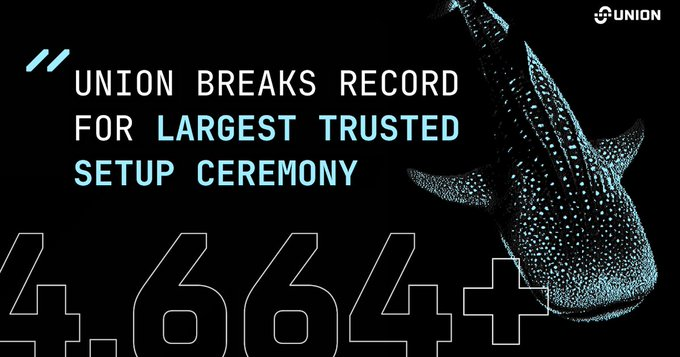
Union is a member-based, decentralized credit protocol built on Ethereum and driven by a DAO, designed to grant on-chain credit lines without requiring excessive over-collateralization. The protocol uses a vouching mechanism in which users back each other by staking stablecoins (e.g., DAI) to establish a trust network and extend credit lines to borrowers. Union disperses credit risk across community members, leveraging transparent smart contracts to manage vouches and lending flows, thereby reducing borrowing costs and improving capital efficiency. This Market Insights article will analyze Union’s innovative value and future outlook across six dimensions: positioning, technology, tokenomics, ecosystem progress, risk mitigation & countermeasures, and future planning.
Summary: Union issues uncollateralized credit via on-chain member vouching; its core lies in a decentralized vouch network and smart-contract–controlled pools; next steps include credit-pool expansion and a governance token launch.
Union’s Positioning
Union positions itself as a “member-based, uncollateralized credit protocol” that offers Ethereum users an efficient lending alternative. Unlike traditional DeFi lending platforms that require ≥100% collateral, Union allows addresses to accumulate credit lines backed by community vouches, enabling them to borrow stablecoins or other assets. This trust network dramatically boosts capital efficiency and lowers the barrier to borrowing.

Core Technology
On-Chain Vouching Mechanism
Members stake stablecoins (such as DAI) to vouch for others, with vouch limits tied to stake amounts. All vouches are recorded in real time on smart contracts, creating a fully auditable web of trust.
Smart-Contract Credit Pools
Both vouching and borrowing requests are managed by on-chain contracts. Once a borrower secures community vouches, they can draw on their credit line instantly. All fund transfers, repayments, and default handling execute automatically and transparently.
DAO-Driven Governance
Protocol parameters—such as vouching rates and maximum vouch multiples—are set by governance-token holders through proposal and voting, ensuring decentralized, sustainable risk control and reward distribution.
Tokenomics Design
According to ConsenSys, while Union has not yet issued a dedicated governance token, it plans to launch a GOV token to serve:
-
A Risk Buffer Fund to compensate vouches in case of borrower default;
-
Governance Voting Rights to decide on protocol upgrades, fee structures, and pool sizes;
-
Ecosystem Incentives to reward active vouching and high-quality borrowing behavior.
Total supply, allocation, and vesting schedules will be co-determined by early community members and core contributors to ensure long-term sustainability.
Ecosystem Progress
Since its late-2024 launch, Union has attracted hundreds of vouching members, with over $2 million DAI staked. By mid-2025, the lending pool processed over 1,000 loans, and active credit utilization continues to grow. The community collaborates via Discord and forums, hosting regular vouching workshops and risk-management seminars to refine UX and security.
Risk Mitigation & Countermeasures
Vouch Limits & Compensation
To limit individual exposure, each vouching member’s maximum vouch amount is tied to their staking and reputation history. In the event of default, a portion of the vouching member’s stake is slashed according to a preset formula, with the protocol’s buffer fund covering the remainder.
Multisig & Upgrade Controls
All core-contract upgrades and governance-parameter changes require a DAO multisig process (e.g., 4/6 signatures), preventing single-point abuse or malicious actions.
Transparent Auditing & Community Oversight
Key data—including vouch graphs, loan histories, and default events—are viewable in real time via block explorers and the front-end interface. The team publishes quarterly risk and security reports and runs an open bug-bounty program to incentivize community safeguarding of the protocol.
Future Planning
Union plans to introduce the GOV governance token in Q4 2025 and to launch cross-chain vouching pools on Polygon, Arbitrum, and other Layer-2 networks. The team will integrate on-chain credit-scoring models based on borrowing behavior data and gradually bridge to CeFi institutions and off-chain assets, creating a seamless DeFi/CeFi credit ecosystem.
FAQ
Q1: How do I become a voucher?
Connect your wallet on the official site, stake DAI, and set your vouch limit to start backing others.
Q2: How is the borrowing rate calculated?
Rates adjust dynamically based on total vouch staked and market supply/demand to balance voucher yield with borrowers’ cost.
Q3: How can I view my credit line?
Your personal vouch graph and available credit line are displayed in real time on the protocol’s front-end dashboard.
Q4: When will the GOV token launch?
GOV is slated for release in Q4 2025; specifics will be finalized via a DAO proposal.
Q5: How do I participate in governance?
Once GOV is live, holders can submit and vote on proposals through the official governance interface.
Key Takeaways
Union is the first member-based, uncollateralized credit protocol, using on-chain vouching for efficient borrowing.
Core technologies include a vouching mechanism, smart-contract credit pools, and DAO governance.
A future GOV token will power risk buffers, governance, and ecosystem incentives.
The protocol has secured over $2 million DAI staked and completed more than 1,000 loans by mid-2025.
Risk controls encompass vouch limits, buffer funds, multisig upgrades, and transparent audits.
Roadmap includes cross-chain expansion, on-chain credit scoring, and a CeFi/DeFi bridging ecosystem.

Neason Oliver