


Key Takeaways
- Memecoins are cryptocurrencies inspired by internet memes and cultural phenomena, driven by community engagement and social media momentum.
- Originating with Dogecoin in 2013, memecoins have evolved with platform-based tokens like Shiba Inu and Bonk, leveraging established blockchains.
- The memecoin market has grown significantly, reaching a $112 billion market cap by late 2024, with high trading volumes and volatility.
- Celebrity endorsements and low barriers to entry fuel memecoin popularity, but they pose risks like pump-and-dump schemes and regulatory scrutiny.
- Memecoins reflect the growing influence of internet culture on financial markets, challenging traditional notions of asset value.
Memecoins represent a unique convergence of internet culture and cryptocurrency, emerging as a distinct subset within the digital asset ecosystem. Unlike traditional cryptocurrencies designed with specific technological innovations or use cases, memecoins derive their identity and value primarily from internet memes, cultural phenomena, or humorous concepts. These digital tokens have gained remarkable traction in recent years, with their collective market capitalization reaching approximately $112 billion by late 2024, reflecting a nearly sevenfold increase since May 2023. This growth underscores the evolving relationship between social media trends, community dynamics, and financial markets in the digital age.

The rise of memecoins challenges conventional understandings of asset value and investment behavior, as these tokens often lack the fundamental technological innovations or practical applications that characterize other digital assets. Instead, they thrive on community engagement, social media momentum, and cultural relatability. This phenomenon has sparked significant debate within financial and technological circles regarding the nature of value in digital economies and the increasing influence of internet culture on financial markets.
This Innovation and Tech report explores how memecoins blend cultural relevance, viral momentum, and blockchain accessibility to create a new asset class defined more by community than code.

History Of Memecoins
The memecoin phenomenon began in December 2013 with the creation of Dogecoin by software engineers as a parody of Bitcoin, inspired by the popular “Doge” meme featuring a Shiba Inu dog. Originally requiring its own layer 1 blockchain to operate, Dogecoin preceded the era of widespread token creation on existing blockchain platforms. What started as a lighthearted joke soon developed a devoted community and gained legitimate traction in cryptocurrency markets.
The evolution of blockchain technology subsequently enabled the creation of memecoins on established networks rather than requiring dedicated blockchains. This technological advancement facilitated a proliferation of meme-based tokens, with examples such as Shiba Inu (SHIB) launching on Ethereum and Bonk (BONK) on Solana. A significant turning point occurred in 2021 when Tesla CEO Elon Musk publicly endorsed Dogecoin through a series of tweets, catapulting memecoins into mainstream consciousness.
The memecoin landscape experienced another surge following Donald Trump’s victory in the 2024 United States presidential election, with new tokens like Fartcoin briefly reaching market valuations exceeding $2 billion. The former president himself embraced the trend, launching his own memecoin called TRUMP just three days before his second inauguration, further legitimizing this cryptocurrency category.
Definition & Characteristics
A memecoin can be formally defined as a cryptocurrency that originated from an internet meme or possesses humorous characteristics that resonate with online communities. These digital assets typically lack intrinsic value or utility and derive their price primarily from community enthusiasm, social media momentum, and speculative trading activity.
The defining features of memecoins extend beyond their cultural references to include their community-centric development model. Unlike traditional cryptocurrencies that focus on technical whitepapers and roadmaps, memecoins emphasize building enthusiastic online communities that drive adoption through shared humor and cultural references. This community-driven approach distinguishes memecoins from other cryptocurrency categories that prioritize technological innovation or practical utility.
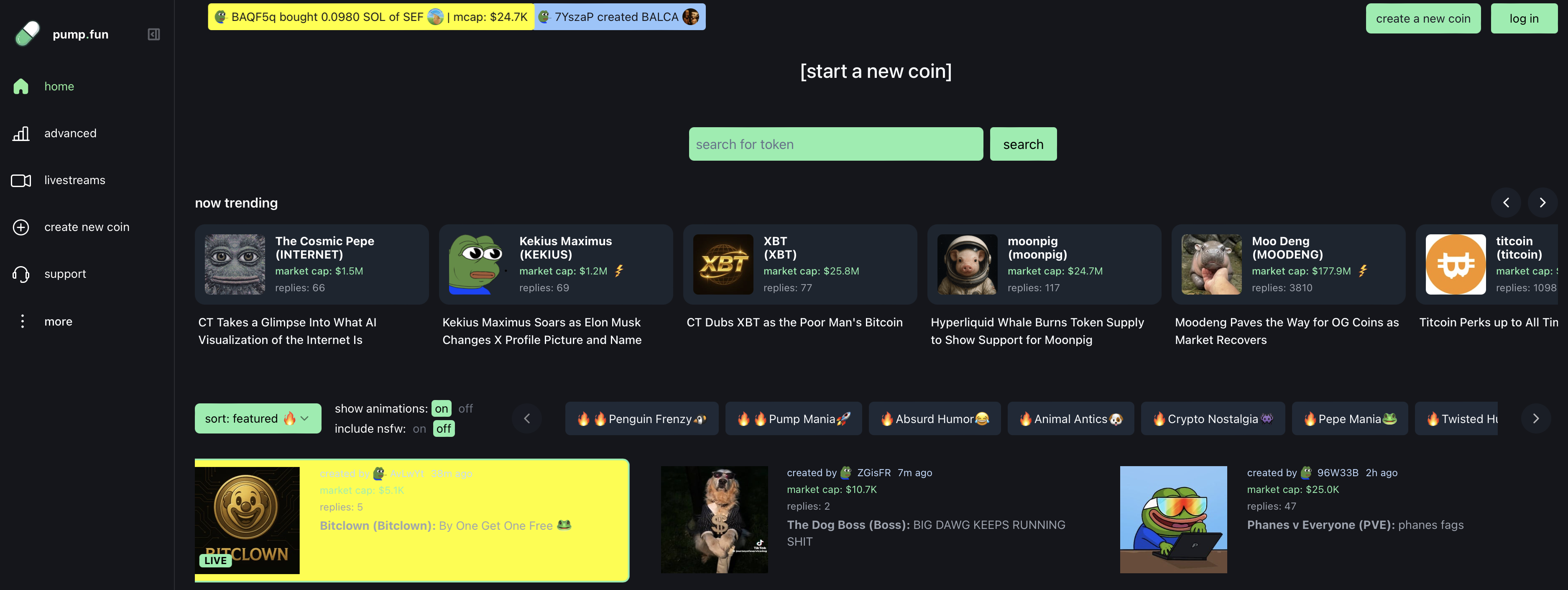
Another notable characteristic involves the creation process, which has become increasingly accessible. The barriers to entry for launching a memecoin have diminished substantially, with specialized platforms enabling rapid deployment. For instance, the platform Pump.fun facilitated the launch of approximately 5.3 million memecoins between January 2024 and January 2025, averaging about 15,229 new tokens daily. This low barrier to entry contributes to the category’s proliferation but also raises concerns about market saturation.
Categories Of Memecoins
The memecoin ecosystem encompasses several distinct categories that reflect different origins and community dynamics. The most established category includes “pioneer” memecoins like Dogecoin, which emerged as direct parodies of Bitcoin and other early cryptocurrencies. These pioneers typically maintain their own blockchains and have developed substantial communities over time.
“Platform-based” memecoins operate as tokens on established blockchain networks. Shiba Inu on Ethereum and Bonk on Solana exemplify this category, leveraging the security of established networks rather than maintaining independent blockchains. The Solana blockchain has emerged as a particularly fertile environment for memecoin development in 2024, with its low transaction fees making it especially conducive to frequent trading and community engagement.
Celebrity-inspired memecoins form another prominent category, deriving their identity from association with public figures. Examples include Coinye, which referenced Kanye West, and more recently, Trump’s self-named token. These celebrity connections often generate immediate attention but may face additional regulatory scrutiny regarding securities laws.

Market Impact & Trading Dynamics
Memecoins have established themselves as a significant component of the cryptocurrency market, with trading volumes consistently exceeding $6 billion daily in early 2025. This represents substantial participation from both retail and institutional traders, demonstrating the growing financial significance of these culturally-driven digital assets.
The impact of memecoins extends beyond their direct market presence to influence broader cryptocurrency market dynamics. These tokens often serve as leading indicators of retail sentiment and speculative interest, with their price movements sometimes preceding broader market trends. Research indicates that memecoin trading activity can signal the entry of new retail investors into cryptocurrency markets, particularly during periods of widespread media coverage.
Trading patterns for memecoins differ notably from established cryptocurrencies like Bitcoin and Ethereum. Memecoin prices typically exhibit greater volatility, with dramatic price swings driven by social media trends, celebrity endorsements, or community coordination rather than fundamental developments. This volatility creates both opportunity and risk for traders, with some experiencing substantial returns while others face significant losses when market sentiment shifts rapidly.
Risks & Regulatory Considerations
The memecoin sector presents substantial risks that merit careful consideration. The extreme price volatility makes these tokens particularly susceptible to pump-and-dump schemes, where coordinated buying drives prices higher before insiders sell their holdings at inflated values. This dynamic resembles Ponzi schemes in that value depends heavily on attracting new buyers rather than generating fundamental utility.
Regulatory responses to memecoins vary significantly across jurisdictions. In early 2021, Thailand’s Securities and Exchange Commission banned memecoins as part of broader restrictions on digital assets lacking “clear objective or substance.” In the United Kingdom, the Advertising Standards Authority has investigated promotional campaigns for memecoins like Floki Inu, considering them advertisements for unregulated financial products.
The creation and trading of memecoins also raise important questions about financial literacy and investor protection. The low barriers to entry for both creating and purchasing memecoins enable participation from individuals who may lack understanding of blockchain technology or investment fundamentals. This accessibility creates conditions where inexperienced investors may face substantial financial risks without fully comprehending the speculative nature of these assets.
Memecoins’ Impact: Merging Cultural Phenomena With Financial Innovation
Memecoins represent a fascinating convergence of internet culture, community dynamics, and financial markets that challenges traditional conceptions of value and investment. Their rise demonstrates how social media trends and cultural phenomena increasingly influence financial markets, creating new asset categories that operate according to principles different from conventional investments. Despite their often whimsical origins, memecoins have established themselves as a significant component of the cryptocurrency ecosystem, with substantial market capitalizations and trading volumes that demand serious consideration.
The future of memecoins remains uncertain, with potential paths ranging from increasing mainstream acceptance to regulatory crackdowns or market saturation. What seems clear, however, is that the social and cultural dimensions of value creation revealed by the memecoin phenomenon will continue to shape the evolution of digital asset markets. As blockchain technology and internet culture continue their intertwined development, memecoins stand as a testament to how financial innovation increasingly reflects not just technological advancement but also the power of shared cultural references and community engagement in the digital age.

Michael Crag